
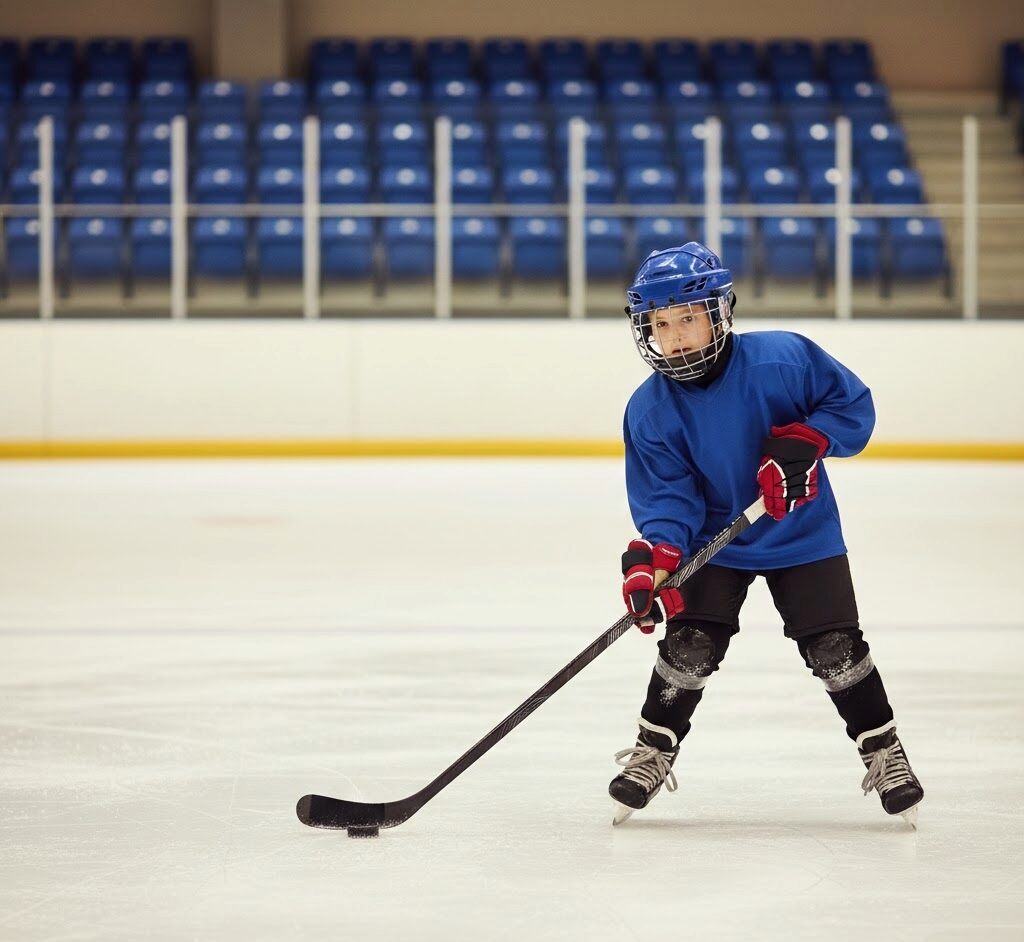
How to Choose a Youth Hockey Stick
Choosing the right stick is one of the most important early decisions a parent can make for a new hockey player. When you understand how to choose a youth hockey stick based on length, flex, curve, lie, and handedness, you give your child equipment that supports natural posture, easier puck control, and proper shooting mechanics. A well‑fitted stick helps beginners learn faster and enjoy the game more. For a full breakdown of essential gear, see What Hockey Gear Do Kids Actually Need?
This guide breaks down every major decision into simple, parent‑friendly steps so you can confidently select a stick that fits your child right now—not one they’ll “grow into.” If you’re building a full starter setup, compare this with Best Beginner Hockey Gear Under $300.
What a Beginner Stick Should Feel Like
A beginner stick should feel light, easy to move, and comfortable in your child’s hands. Kids are learning how to skate, pass, and shoot at the same time, so the right stick helps them:
- Maintain natural skating posture
- Keep the blade flat on the ice
- Control the puck without fighting the stick
- Learn proper shooting mechanics
- Build confidence earl
The goal is not perfection—it’s giving your child a stick that makes learning easier. For help pairing the stick with the right skates, see How to Choose Youth Hockey Skates for Beginners.
Quick Parent Recommendation:
If you want a simple, reliable starting point:
- Length: Nose in shoes, chin in skates
- Flex: About half your child’s body weight
- Curve: Mid or mid‑toe (P92/P29)
- Lie: 5 or 5.5
- Material: Entry‑level composite
- Price Range: $40–$90
This setup works for almost every beginner. For a full gear‑fit overview, visit Proper Fit for Youth Hockey Gear: Why It Matters for Safety.
Stick Anatomy and Why It Matters
Shaft
The shaft is the long portion your child holds. Youth shafts are thinner and lighter to help small hands grip properly. Composite shafts offer consistent flex and durability.
Blade
The blade is the flat part that touches the puck. A moderate curve helps beginners pass, shoot, and control the puck without making anything too advanced.
Flex
Flex is how easily the stick bends. A stick that’s too stiff makes shooting frustrating. A stick that’s too soft can feel unstable.
Rule of thumb: Flex ≈ half your child’s body weight.
Lie
Lie is the angle that helps the blade sit flat on the ice. Most beginners do best with a 5 or 5.5 lie.
Kick Point
Kick point is where the stick bends during a shot. Youth sticks typically use low or mid kick points, which help kids learn proper shooting mechanics.
Materials and Construction
Composite Sticks
Composite sticks are lightweight, consistent, and easier for kids to handle.
Pros: Light, durable, consistent flex
Cons: Higher cost
Wood Sticks
Wood sticks are affordable and traditional but heavier.
Pros: Low cost, classic puck feel
Cons: Heavier, less consistent, more likely to warp
Best for beginners: A lightweight composite stick is usually the easiest to learn with. For budget‑friendly options, see Affordable Youth Hockey Gear for Beginners.
One‑Piece vs. Two‑Piece
- One‑piece: Blade and shaft fused together. Smooth, consistent feel.
- Two‑piece: Blade and shaft separate. Good for replacing parts but less common today.
Best for beginners: One‑piece composite for simplicity and consistency.
Sizing Stick Length
Stick length affects posture, reach, and puck control. When learning how to choose a youth hockey stick, length is the first and most important factor.
Simple rule:
- In shoes: Up to the nose
- In skates: Up to the chin
A stick that’s too long makes learning harder. A stick that’s too short limits reach and power.
For a full gear checklist, see Youth Hockey Gear Checklist for Beginners (A Parent’s Guide).
Hockey Stick Sizing Table
| Height (in) | Stick Length (in) | Category |
| 36-44 | 38-44 | Youth |
| 46-53 | 46-53 | Junior |
| 54-58 | 54-58 | Intermediate |
| 56-63 | 56-63 | Senior |
Cutting the Stick
Cutting makes the stick stiffer.
Each inch removed adds 3–5 flex points.
Cut small amounts at a time and re‑check fit.
Choosing the Right Flex
Flex determines how easily your child can bend the stick to shoot. It’s one of the most important parts of learning how to choose a youth hockey stick correctly.
Mobile‑Friendly Flex Table
Flex Table
| Weight (lbs) | Flex | Category |
| 30-60 | 20-30 | Youth |
| 60-100 | 40-50 | Junior |
| 100-140 | 55-70 | Intermediate |
| 140+ | 75-100+ | Senior |
Quick Flex Test
Have your child press down on the stick like a wrist shot:
- Barely bends → Too stiff
- Bends too easily → Too soft
- Bends with effort → Just right
Blade Curves and Patterns
Best Curves for Beginners
- P92 / P29 (Mid‑Toe Curve): Easiest for learning all skills. Helps lift the puck and control it on both sides.
- P88 (Mid‑Heel Curve): Good for control and passing. Still beginner‑friendly.
Curves to Avoid: - P28 (Toe Curve): Designed for advanced players. Harder for beginners to control.
Lie: Keeping the Blade Flat
Lie helps the blade sit flat on the ice.
How to Check It:
- Toe off ice → Lie too low
- Heel off ice → Lie too high
- Blade flat → Perfect
Cutting the stick shorter increases the lie, so re‑check after trimming.
Kick Point for Beginners
- Low kick point: Easiest for wrist and snap shots
- Mid kick point: Balanced for all‑around play
- High kick point: Not needed for beginners
Most youth sticks already use low or mid kick points.
Handedness: Left or Right Stick?
Simple Rule
The dominant hand goes on top for better control.
Broomstick Test
Ask your child to sweep the floor:
- Right hand on top → Left‑handed stick
- Left hand on top → Right‑handed stick
Comfort matters more than writing hand or other sports.
Position‑Specific Tips
Forwards
- Slightly shorter stick
- Mid‑toe curve (P92/P29)
Softer flex
Defensemen
- Slightly longer stick
- Stiffer flex
- Mid or heel curve
Common Mistakes Parents Can Avoid
- Buying a stick that’s too long
- Choosing a flex that’s too stiff
- Picking an advanced curve
- Ignoring handedness
- Overvaluing brand or price
- Forgetting to re‑check flex and lie after cutting
For a full protective‑gear breakdown, see Choose Protective Hockey Gear.
When to Upgrade
Upgrade when your child:
- Has outgrown the stick
- Can easily flex their current stick
- Is developing stronger shots
- Shows wear or loss of pop
Mobile‑Friendly Category Table
Maintenance and Care
- Keep the stick dry
- Tape the blade regularly
- Inspect for cracks or splinters
- Avoid extreme temperatures
- Add grip tape if needed
Budget‑Friendly Options
- Wood sticks: Great for outdoor play
- Entry‑level composites: Best for beginners on ice
- Used sticks: Good if in solid condition and properly sized
Fit matters more than price.
Finding the Right Hockey Stick
Understanding how to choose a youth hockey stick gives parents the confidence to select equipment that truly supports their child’s development. The right stick helps kids skate naturally, control the puck with confidence, and learn proper shooting mechanics. By focusing on fit—not brand or price—you give your child the best chance to enjoy the game and build skills that last.
A well‑fitted stick becomes a natural extension of their hands, helping them grow, improve, and fall in love with hockey.
A well‑fitted stick becomes a natural extension of their hands, helping them grow, improve, and fall in love with hockey.
To complete your child’s setup, explore Best Youth Hockey Skates in 2026 and Find USA Hockey Approved Gear.