
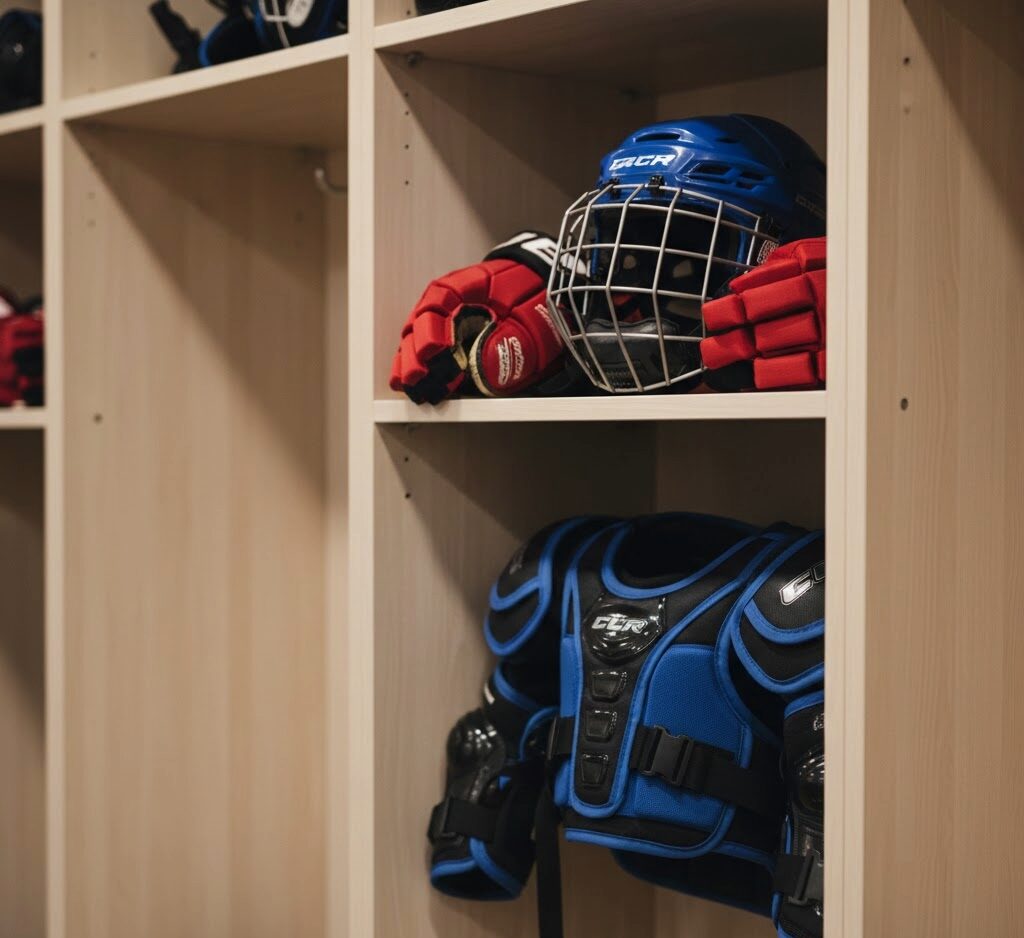
Choose Protective Hockey Gear
A full set of protective hockey gear keeps your child safe, confident, and able to learn the game without fear. When each piece fits correctly, kids move naturally, maintain proper skating posture, and stay protected during falls and collisions. When gear is too big, too small, or poorly fitted, it can restrict movement and leave gaps that reduce protection. For a full breakdown of how gear should fit, see Proper Fit for Youth Hockey Gear: Why It Matters for Safety.
This guide explains how to choose protective hockey gear for kids, including what each piece does, how it should fit, and what parents should look for when buying equipment for beginners. If you’re building a full starter setup, compare this with Beginner Hockey Gear Explained for Parents.
Why Proper Fit Matters
Protective gear affects both safety and skill development. Well‑fitted gear should:
- Allow full range of motion
- Stay securely in place
- Protect all major impact zones
- Feel comfortable for long practices
- Support natural skating posture
Kids learn faster and feel more confident when their gear fits correctly. For a complete list of what your child needs, visit What Hockey Gear Do Kids Actually Need?
Essential Protective Gear
Every youth hockey player needs:
- Helmet with cage
- Shoulder pads
- Elbow pads
- Gloves
- Shin guards
- Hockey pants
- Protective cup or pelvic protector
- Neck guard (required in many leagues)
- Mouthguard
- Hockey socks and jersey to cover gear
For a printable checklist, see Youth Hockey Gear Checklist for Beginners (A Parent’s Guide).
Each piece protects a specific area and must fit properly to work effectively.
Shoulder Pads
Shoulder pads protect the shoulders, chest, back, and upper arms.
How Shoulder Pads Should Fit
- Shoulder caps sit directly over the shoulder joints.
- Chest and back panels wrap comfortably without gaps.
- Pads stay in place when the child raises their arms.
- Bicep guards overlap the elbow pads slightly.
What to Look For - Lightweight construction
- Adjustable bicep guards
- Good sternum and spine protection
- Snug but flexible fit
Entry‑level pads are usually ideal for beginners. For more guidance on choosing pads, see Affordable Youth Hockey Gear for Beginners.
Elbow Pads
Elbow pads protect the elbow joint and forearm.
How Elbow Pads Should Fit:
- Elbow sits securely in the pocket.
- Forearm guard overlaps the glove cuff.
- Bicep guard overlaps the shoulder pad.
- Straps hold the pad in place without slipping.
Common Fit Issues - Pads sliding down the arm
- Gaps between elbow pads and gloves
- Pads rotating during movement
A secure elbow pad prevents painful falls and protects the joint.
Gloves
Gloves protect the hands, fingers, and wrists while allowing stick control.
How Gloves Should Fit:
- Fingers reach the end without pressing.
- Glove closes easily around the stick.
- Cuff overlaps the elbow pad.
- No pinching or pressure points.
What to Look For: - Durable palm
- Flexible cuff
- Breathable materials
- Proper finger length
Gloves that are too big make stickhandling difficult.
Shin Guards
Shin guards protect the shins and knees from pucks, sticks, and falls.
Shin Guard Sizing Table
| Height (in) | Shin Guard Length (in) |
| 40-46 | 8-9 |
| 46-52 | 10-11 |
| 52-58 | 12-13 |
| 58-64 | 14-15 |
How Shin Guards Should Fit:
- Knee sits centered in the knee pocket.
- Bottom of the guard meets the top of the skate tongue.
- Straps hold the guard firmly.
- No gaps between shin guards and pants.
Shin guards that rotate or slide can expose the knee or shin during falls.
Hockey Pants
Hockey pants protect the hips, thighs, tailbone, and lower spine.
How Hockey Pants Should Fit:
- Waist sits at the belly button.
- Length reaches the top of the kneecap.
- Spine guard covers the lower back.
- Thigh pads stay centered.
What to Look For: - Adjustable waist
- Good tailbone padding
- Lightweight but durable materials
- Proper overlap with shin guards
Pants that are too big sag and expose the lower spine.
Neck Guards and Mouthguards
Many leagues require both.
Neck Guard Fit
- Wraps comfortably around the neck
- Covers front and sides
- Does not restrict breathing or movement
Mouthguard Fit - Snug over upper teeth
- Does not fall out when talking
- Boil‑and‑bite models work well for beginners
These small pieces add important protection for vulnerable areas.
Protective Cup or Pelvic Protector
Required for all players.
Should fit snugly and stay centered during movement.
Building a Complete Protective Setup
A full set of gear should overlap correctly:
- Shoulder pads overlap elbow pads
- Elbow pads overlap gloves
- Pants overlap shin guards
- Shin guards meet skate tongues
- Helmet cage aligns with chin cup
Proper layering ensures full coverage. For a full starter setup under budget, see Best Beginner Hockey Gear Under $300.
Common Mistakes Parents Make
- Buying gear too big to “grow into”
- Leaving gaps between pads
- Choosing based on brand instead of fit
- Ignoring comfort and mobility
- Using hand‑me‑down gear that no longer fits
- Overlooking spine, tailbone, or bicep protection
Gear that fits now is always safer than gear that might fit later.
Budget‑Friendly Options
Parents can build a safe, comfortable gear setup without overspending.
Entry‑Level Gear
Entry‑level gear is designed for beginners and offers reliable protection at the lowest price point. It uses simple padding, lightweight materials, and straightforward adjustment systems. It’s ideal for kids skating 1–2 times per week or just starting out.
Mid‑Range Gear
Mid‑range gear adds better padding, improved ventilation, and more adjustable components. It lasts longer and feels more comfortable during longer practices. It’s a good choice for kids skating 2–4 times per week.
Used Gear
Used gear can be cost‑effective if it’s in excellent condition. Padding must be intact, straps must work, and there should be no cracks or compressed foam. Best when you know the gear’s history.
What Not to Buy Used:
- Helmets
- Mouthguards
- Neck guards
These items degrade or mold and should always be purchased new.
When to Replace Gear
Replace gear when:
- Padding is compressed
- Straps no longer secure
- Shells are cracked
- Gear shifts during movement
- Your child has outgrown it
Kids grow quickly — reassess fit every few months.
Choose Protective Gear
Choosing protective hockey gear for kids is about balancing safety, comfort, and mobility. When each piece fits correctly, your child can skate confidently, learn proper technique, and enjoy the game without distraction. Focus on fit first, not brand or price, and build a setup that supports your child’s growth and development on the ice.